
Grinding is the first and most energy-intensive step in any feed production line. Before ingredients can be mixed and pelleted, every grain, kernel and oilseed meal must be reduced to a particle size that suits the animal, the pellet die and the downstream mixer. That is why the choice of a grain feed hammer mill manufacturer has a direct effect on your output per hour, your electricity bill per ton, your spare-parts cost and the final quality of your feed. A machine that looks similar on paper can behave very differently once it runs 16 hours a day, six days a week.
Jiangsu Huamu Machinery Co., Ltd. (江苏华牧机械有限公司) is a feed machinery manufacturer located in Xibei Town, Wuxi City, Jiangsu Province, an area with well-developed transport links and a mature equipment supply chain. The company designs, manufactures, installs and commissions complete production lines for feed, biomass and organic fertilizer, and supplies waterdrop hammer mills, ring die pellet machines, double-shaft mixers, coolers, stabilizers, crumblers, extruders, dryers, packing machines, elevators, conveyors and dust collectors. This guide explains how a modern hammer mill works, what to compare between suppliers, and how to decide whether a specific machine and a specific manufacturer are the right fit for your project.
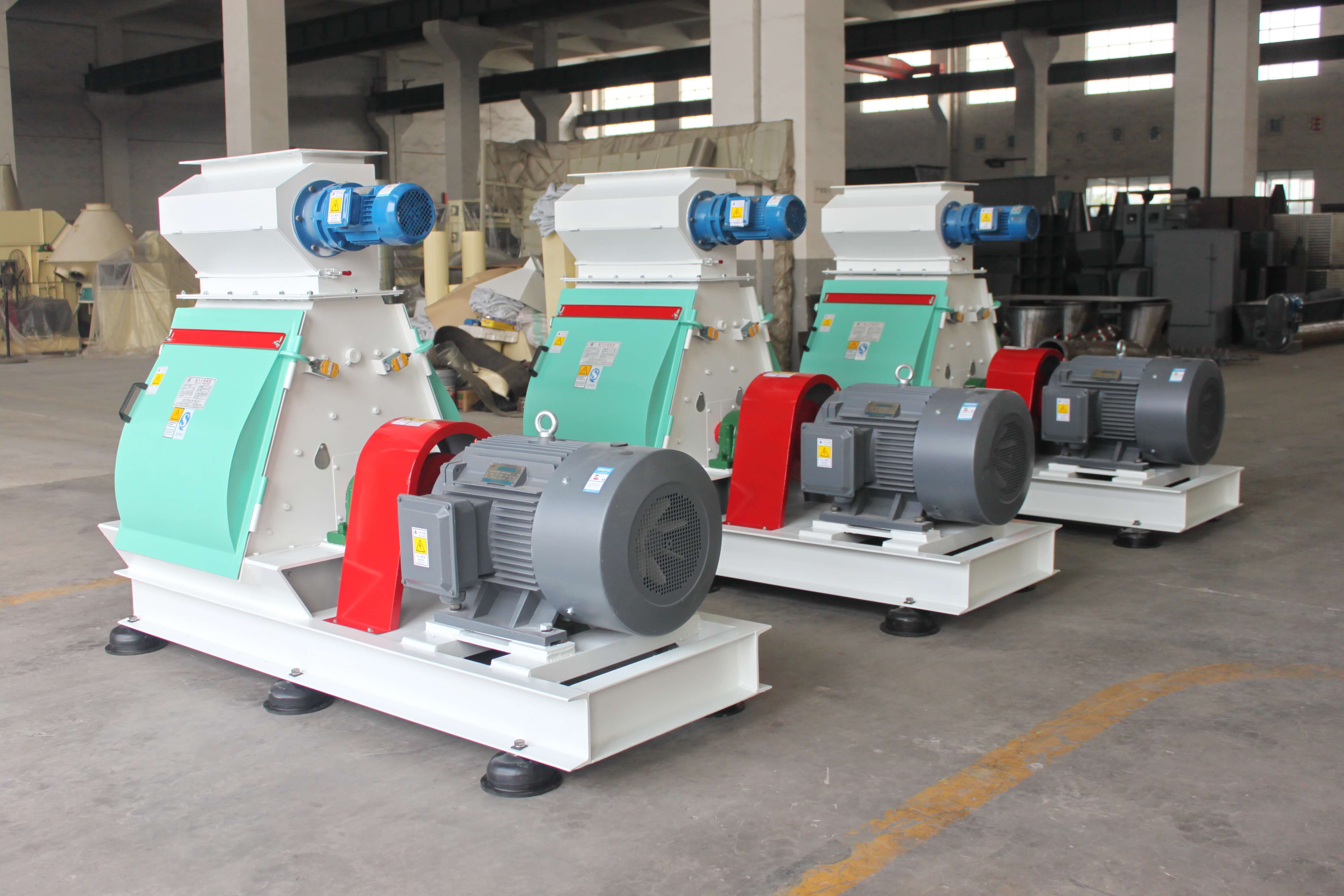
Why the Hammer Mill Decides the Economics of Your Feed Plant
In a pellet feed plant, grinding typically accounts for a large share of total power consumption. Every percentage point of grinding efficiency is multiplied by thousands of operating hours. If a mill produces a wider particle-size distribution than your formula requires, you pay twice: once in wasted energy during grinding, and again when poorly prepared mash leads to unstable pellet quality, higher fines and more steam demand in the conditioner.
Particle size also drives animal performance. Poultry feed is normally ground finer than cattle feed, and aquatic feed requires micro-fine grinding so that pellets hold together in water. A hammer mill that can only do one of these jobs forces a plant to buy two machines or to compromise on quality. This is precisely the problem that a well-designed waterdrop hammer mill is built to solve.
Finally, the hammer mill is a high-wear machine. Hammers, screens and bearings are consumables, and their replacement cost and downtime depend on how well the mill was engineered, how accessible the grinding chamber is and whether the supplier can deliver parts quickly. When buyers ask which feed hammer mill supplier is reliable, they are really asking about long-term operating cost, not only the purchase price.
What Makes Jiangsu Huamu a Professional Grain Feed Hammer Mill Manufacturer
Jiangsu Huamu Machinery occupies a 10,000 square meter manufacturing site with a registered capital of 10 million RMB and was recognized in 2024 as a “Specialized, Refined, Differential and Innovative” (专精特新) small and medium-sized enterprise in Jiangsu Province. The company operates under an ISO9001 quality management system, and its equipment has been exported to more than 50 countries and regions. These are not marketing statements but practical indicators: an ISO9001 process means documented inspection points, and export experience means the machine must survive different voltages, climates, raw materials and operator skill levels.
Waterdrop Grinding Chamber Design
The grinding chamber of the Huamu hammer mill is shaped like a water drop rather than a perfect circle. The asymmetric profile changes the path of the material inside the chamber, breaking the circular airflow that causes material to circulate endlessly without passing the screen. In practice this means less heat build-up, less re-grinding of already-finished particles and a more uniform finished product. The waterdrop shape also makes the top inlet offset, so material enters the zone of highest hammer speed immediately instead of drifting along the chamber wall.
“M”-Shaped Secondary Impact Structure
Behind the primary impact zone, Huamu hammer mills use a secondary impact structure arranged in an “M” pattern. Material that is not reduced to size on the first strike is deflected back into the hammer path instead of being pushed along the screen surface. Compared with a conventional single-impact chamber, this structure raises output by approximately 25% on the same installed power, while reducing the amount of oversized material recirculating inside the mill. For a plant running several shifts a day, that 25% output advantage often translates into one fewer grinding line, or the ability to absorb a capacity increase without buying a new machine.
One Machine, Three Grinding Duties
By changing the screen and adjusting the hammer-to-screen clearance, the same Huamu hammer mill can perform coarse grinding, fine grinding and micro-fine grinding. This single-machine flexibility is valuable for plants producing several product lines: poultry and swine compound feed, ruminant feed, and aquatic feed can all be processed on the same unit, with the screen configuration matched to each formula.
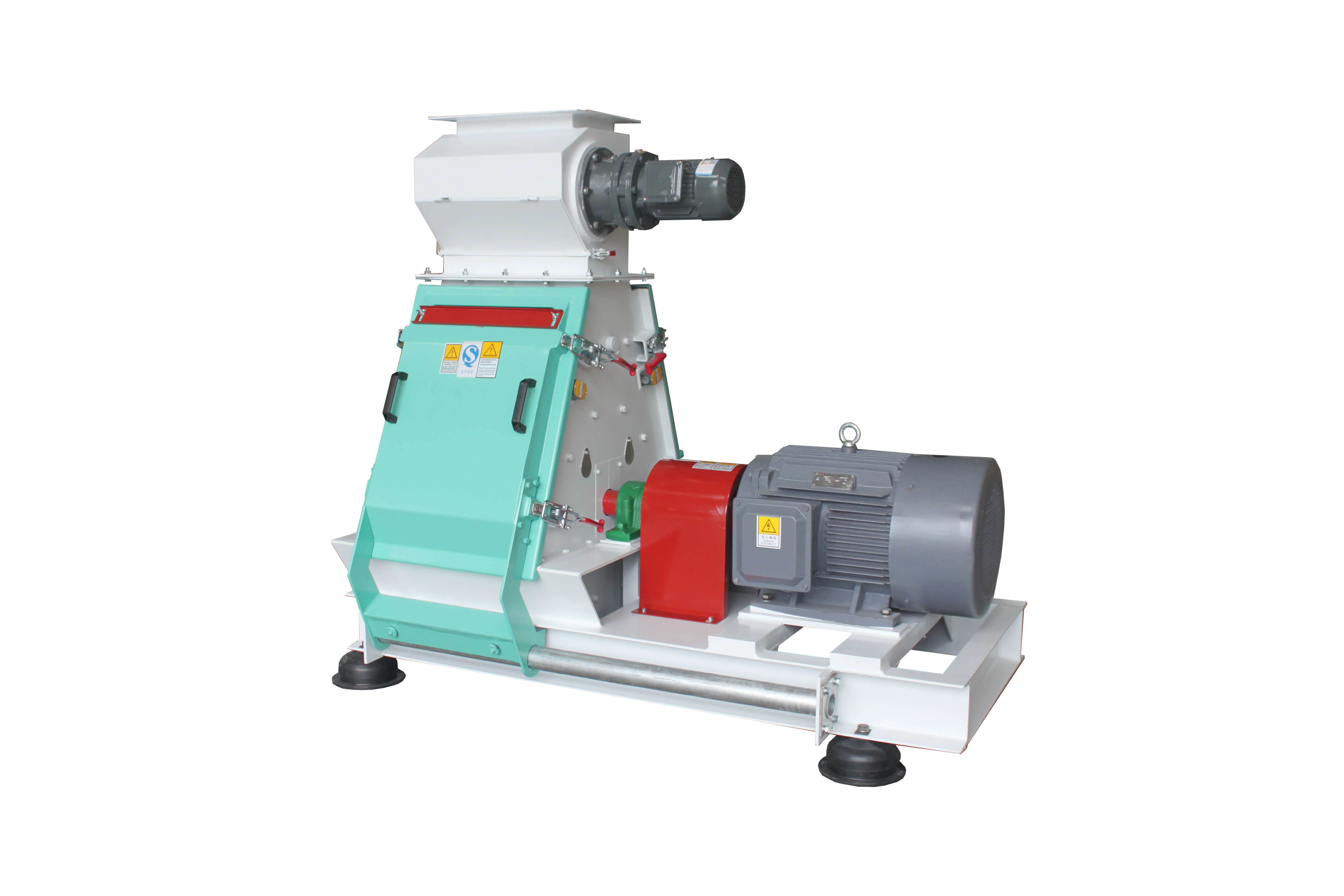
Waterdrop Hammer Mill vs Conventional Hammer Mill: A Performance Comparison
When comparing quotations from different grain feed hammer mill manufacturers, it helps to compare the machines parameter by parameter rather than by price alone. The table below summarizes the design differences that matter most during daily operation. Values are qualitative comparisons of Huamu’s waterdrop design against a typical conventional circular-chamber hammer mill of similar installed power.
| Comparison Item | Huamu Waterdrop Hammer Mill | Conventional Circular Chamber Mill |
|---|---|---|
| Chamber geometry | Waterdrop-shaped, offset inlet, no dead circulation zone | Fully circular, material tends to circulate along the wall |
| Impact structure | “M”-shaped secondary impact, repeated striking of oversized particles | Single impact zone, oversized particles exit more slowly |
| Relative output | About 25% higher at the same installed power | Baseline |
| Grinding range | Coarse, fine and micro-fine duty on one machine | Usually optimized for one duty only |
| Temperature rise in chamber | Lower, because finished particles pass the screen faster | Higher, caused by repeated re-grinding |
| Screen and hammer access | Designed for fast replacement during shift change | Replacement can require longer downtime |
Application Scenarios: Where Huamu Hammer Mills Are Used
The core application is compound feed production. In a poultry or swine feed line, the hammer mill sits between the batching scale and the mixer. Corn, wheat, soybean meal, bran and other raw materials are ground to a target particle size, then weighed, mixed and pelletized. Because the waterdrop chamber keeps the particle-size distribution tight, the mixer receives a consistent mash and the pellet mill downstream can run with a stable steam setting.
For aquatic feed, micro-fine grinding is essential to produce sinking or floating pellets that stay intact in water. The same hammer mill, fitted with a finer screen, can provide the fine grind required for fish and shrimp feed, which makes it a practical choice for plants that produce both livestock and aquatic products on the same site.
Beyond feed mills, the machine is also used by alcohol and citric acid producers for raw-material grinding, where the requirement is a stable, repeatable particle size rather than a fine flour. Feed mills that grind premix raw materials, and plants that process biomass or organic fertilizer, can also use the same hammer mill design for size reduction before pelletizing or granulation, which is one reason the company also supplies biomass and organic fertilizer complete lines.
How to Select the Right Hammer Mill for Your Capacity
Jiangsu Huamu designs and manufactures 1–30 t/h powder, premix, pellet and special aquatic feed projects, so almost every enquiry starts with the same question: what grinding duty, at what hourly capacity, on which raw materials? Rather than sending a generic catalogue, a professional supplier should ask for the information listed in the table below before preparing a quotation.
| Information to Prepare | Why the Supplier Needs It |
|---|---|
| Raw materials and their proportions | Different grains have different grinding resistance and bulk density, which changes the required screen opening and hammer layout |
| Required particle size per product line | Determines whether coarse, fine or micro-fine grinding duty is needed and how many screens to supply |
| Hours per day and shifts per week | Models should be sized for continuous duty, not for peak output on a short test run |
| Available power supply and motor voltage | Export projects often require different voltages and protection classes |
| Layout constraints and future expansion | Affects silo arrangement, feeding method, aspiration and space for a second grinding line |
| Site conditions and installation support | Decides whether the project can be delivered as a turnkey package with installation and commissioning |
Installation, Operation and Maintenance Advice
Correct installation is the cheapest performance upgrade available. The mill should sit on a level, rigid foundation with sufficient vibration isolation, and the feeding device should deliver material evenly. Uneven feeding is the most common cause of low output: when material arrives in surges, the chamber is alternately overloaded and starved, and the average capacity drops. A variable-frequency feeder, properly tuned, is usually the fastest way to recover lost tons per hour.
Aspiration matters as much as the hammer arrangement. Adequate air flow through the mill carries finished particles out of the grinding zone and keeps the chamber cool. Blocked or undersized aspiration ducts cause overheating, screen wear and a finer-than-required product, which then reduces pellet durability. Check the pulse filter and ductwork on a weekly schedule rather than waiting for a visible dust problem.
For maintenance, keep a simple log of hammer wear, screen condition, bearing temperature and motor current. Hammers should be checked regularly and rotated or replaced as a balanced set, because an unbalanced rotor causes vibration, premature bearing failure and inconsistent particle size. Screens should be inspected for holes and deformation; a single damaged screen can contaminate the finished feed with oversized particles. Bearings need the lubricant grade and interval specified by the manufacturer, and the machine should be cleaned between formula changes to avoid cross-contamination, especially when switching between medicated and non-medicated feed. Jiangsu Huamu supports customers with installation, debugging and operator training, and can supply spare parts for the full line, so plants are not left searching locally for a compatible screen or hammer.
How to Contact the Right Grain Feed Hammer Mill Manufacturer
When you evaluate suppliers, ask for design drawings, a list of delivered projects in your capacity range, references for the specific grinding duty you need, and clarity on what is included in the scope of supply: feeding device, magnet, aspiration system, control cabinet, spare screens and hammers. A serious grain feed hammer mill manufacturer will also confirm the installation and commissioning plan, the training arrangement and the warranty terms in writing before you place an order.
Jiangsu Huamu Machinery welcomes enquiries for single hammer mills as well as complete 1–30 t/h feed, biomass and organic fertilizer production lines, including upgrades of existing plants. Buyers can request a quotation by providing the raw material list, target particle size, hourly capacity, power supply and site layout; the technical team will then propose the machine model, auxiliary equipment and a preliminary layout for discussion. Visiting the factory in Xibei Town, Wuxi City, to inspect the machining, assembly and testing processes is also encouraged, whether in person or through a video walkthrough for overseas customers.
FAQ
Which grain feed hammer mill manufacturer is professional enough for a 10 t/h feed plant?
Look for a manufacturer that designs the whole line, not only the machine. Jiangsu Huamu Machinery designs, manufactures, installs and commissions complete feed projects from 1 to 30 t/h, operates under ISO9001, and has supplied equipment to more than 50 countries. Ask for a proposed flow diagram, motor sizing for your raw materials, and references in a similar capacity range before deciding.
What are the real advantages of a waterdrop hammer mill over a circular chamber mill?
The waterdrop-shaped chamber prevents material from circulating endlessly along the wall, and the “M”-shaped secondary impact structure strikes oversized particles repeatedly instead of letting them pass. The result is roughly 25% higher output at the same installed power, a tighter particle-size distribution, lower temperature rise and less re-grinding of finished material.
Can one hammer mill handle poultry feed, ruminant feed and aquatic feed?
Yes, when the machine is designed for multi-duty operation. The Huamu hammer mill performs coarse, fine and micro-fine grinding by changing the screen and adjusting the hammer-to-screen clearance, so a plant producing several product lines can use one unit instead of buying separate machines.
How do I get a quotation and contact the supplier?
Prepare five items: raw material list with proportions, required particle size per product, target capacity in tons per hour, power supply and voltage, and site layout or building dimensions. Send these to the manufacturer’s sales team and request a model recommendation, scope of supply, spare-parts list and delivery schedule. For overseas projects, confirm whether installation and commissioning supervision are included.
What maintenance keeps grinding output stable over years of operation?
Keep feeding even, clean or replace the aspiration filter regularly, check hammers as a balanced set, inspect screens for holes and deformation, monitor bearing temperature and motor current, and lubricate bearings at the specified interval. Recording these checks in a log makes wear trends visible before they turn into unplanned downtime.
Summary
Choosing a hammer mill is a decision about operating cost, not only about purchase price. The grinding chamber shape, the impact structure, the ability to switch between coarse, fine and micro-fine duty, and the accessibility of wear parts all determine how many tons you produce per hour and how much you spend per ton over the next decade. Jiangsu Huamu Machinery combines a waterdrop grinding chamber and an “M”-shaped secondary impact structure in a machine that delivers about 25% more output at the same power, and backs it with complete line design, installation, commissioning and spare-parts support for projects from 1 to 30 t/h. Whether you are building a new feed plant, upgrading an existing grinding section, or adding an aquatic feed line, the practical next step is to send your raw material list, target particle size and required capacity to the technical team, then compare the proposed solution against the checklist in this guide.