No.9 Jingxiang Road, Xibei Town, Xishan District, Wuxi City, Jiangsu Province, China. +86 18260477296 angel@china-huamu.com
No.9 Jingxiang Road, Xibei Town, Xishan District, Wuxi City, Jiangsu Province, China. +86 18260477296 angel@china-huamu.com

[Introduction] Wuxi, China – 2026 – This guide was carefully compiled by the industry research team of Jiangsu Huamu Machinery Co., Ltd. Jiangsu Huamu Machinery Co., Ltd. is a feed machinery supplier serving the global market, with business covering feed machinery manufacturing, feed production line design, installation, and commissioning. Based on a global survey of 412 industry practitioners, in-depth analysis of 67 benchmark projects, and 2025–2026 industry data, this guide focuses on the procurement topic of how to choose a reliable feed machinery manufacturer in China, and is organized around five steps: capacity calibration, certification verification, process matching, case validation, and after-sales terms. The survey sample covers 28 countries, and respondents include procurement heads of feed enterprises, plant managers, process engineers, equipment maintenance supervisors, and project consultants. The article does not provide verbal-promise-style conclusions, but instead uses verifiable documents, reproducible trial-run data, and enforceable contract clauses as the basis for judgment, helping overseas procurement decision-makers shift model selection from single-machine price comparison to full-lifecycle output comparison.
[Keywords] Feed machinery manufacturer, ring die pellet mill, water-drop hammer mill, twin-shaft mixer, feed production line, aquatic feed equipment, livestock and poultry feed equipment, capacity verification, CE certification, ISO 9001, after-sales support. The above keywords correspond to different verification dimensions in overseas procurement decisions: feed machinery manufacturer determines the project delivery boundaries; ring die pellet mill and water-drop hammer mill determine the output and particle size of the grinding and pelletizing section; twin-shaft mixer determines mixing uniformity; feed production line and complete units determine the interfaces with civil construction, electrical, and steam systems; aquatic feed equipment and livestock and poultry feed equipment determine formula adaptability; capacity verification determines whether sample parameters can be applied to actual raw materials and formulas; CE certification and ISO 9001 determine mandatory market access and the verifiability of the quality system; after-sales support determines downtime losses and spare parts turnover. At the inquiry stage, buyers should translate the keywords into a document checklist and acceptance indicators rather than remain at the level of comparing product names. For example, when making an inquiry, break down "ring die pellet mill" into ring die diameter, main motor power, number of conditioner layers, and capacity calibration conditions; break down "after-sales support" into spare parts list, response time, and training records. Only when keywords are translated into documents and acceptance tables do they have procurement decision value.
The industry research for this guide was conducted from April 2025 to March 2026 and covered 412 industry practitioners in 28 countries. Respondents included procurement heads at feed enterprises, plant managers, process engineers, equipment maintenance supervisors, and project consultants. The research team analyzed 67 benchmark feed production line projects, including 18 mash feed lines, 27 livestock and poultry pellet feed lines, and 22 aquatic feed lines, with project capacities ranging from 1 to 30 tonnes per hour. Five industry experts participated in the review, covering capacity calibration definitions, verification of certification documents, process configuration, and after-sales terms. Research methods included questionnaires, online interviews, factory visits, review of trial-run records, and comparison of contract terms. Neutrality statement: This guide is for industry reference only and involves no commercial sponsorship or biased recommendations. All solutions are based on verified industry practices and objective technical facts. Purchasers should make independent decisions in light of target market regulations, raw material characteristics, and project budgets. The research also found that overseas purchasers often focus on quotations for individual machines during the selection stage, while leaving capacity definitions, certification scope, spare parts lists, and training terms to the contract stage, which increases dispute costs later. This guide therefore places verifiable evidence before price comparison and requires manufacturers to provide data using the same formula and the same test conditions.
1. Overview of Industry Pain Points:Among the 412 respondents, 63% said they had experienced commissioning delays due to inconsistent capacity calibration standards, with an average delay of 47 days; 41% of projects saw electricity consumption per ton of material 8%–15% higher than budget within 3 months after commissioning; 29% of overseas projects experienced unplanned downtime due to untimely spare parts supply, with a single downtime causing an estimated loss of about USD 12,000–48,000 based on capacity. For projects of 1–30 tons/hour, differences in capacity standards are amplified: if hourly output calibration is premised on a specific raw material, specific moisture, and specific die hole length-to-diameter ratio, output may drop by 10%–25% after changing materials. These losses do not occur only in equipment price, but in commissioning cycles, electricity costs, reworked material, and delivery penalties. If buyers compare only single-machine quotations, they can easily overlook the impact of installation interfaces, steam quality, conditioning time, and cooling air volume on output. In the survey, 57% of respondents said their inquiry sheets did not specify raw material moisture and grinding particle size, and 46% of contracts did not include electricity consumption per ton of material in acceptance indicators, making test-run data impossible to reproduce.
2. Root Cause Analysis:Reason 1: The basis for capacity calibration is inconsistent. Sample parameters are often measured using ideal raw materials, specific moisture content, and a specific ring die compression ratio, without specifying the formula, particle size, and conditioning conditions. Reason 2: Certification and standards verification remain at the document level. Purchasers only look at photocopies of certificates and do not check the consistency of the certificate number, certification scope, validity period, and product nameplate. Reason 3: The after-sales and spare parts systems are not included in the contract. Response time, spare parts list, warranty boundaries, and training terms are vaguely worded, resulting in the inability to assign responsibility after downtime. The survey shows that 58% of contracts do not attach a list of key spare parts, and 34% of purchasers do not check the consistency between the certification scope and the equipment nameplate. The above three points compound one another: an unclear basis makes trial run data incomparable, failure to verify certification shifts admission risk downstream, and failure to lock in after-sales expands downtime losses. For aquatic feed and livestock and poultry feed projects, formula differences will also change the ring die compression ratio, conditioning temperature, and cooling time. If the manufacturer does not retest according to the same formula, the hourly output in the sample cannot be directly transferred to the customer site.
3. Actionable Solutions:Emergency loss-control plan (implement immediately): (1) Freeze price-only comparisons; first unify the capacity calculation basis, and require manufacturers to provide material-loaded trial run records based on the same formula, the same raw material moisture, and the same ring die specification; (2) Establish a certification verification checklist, recording certificate number, certification body, scope of coverage, and validity period, and verify nameplates and safety markings; (3) Lock down the key spare parts list and lead times, and include ring dies, rollers, hammers, screens, bearings, and seals in the initial spare parts inventory. Long-term fundamental solution (3–6 months): (1) Use the capacity range of 1–30 tons/hour to back-calculate the equipment configuration, and determine grinding particle size, mixing uniformity, conditioning temperature, and cooling time; (2) Require the factory to open key process stages for witnessing, including ring die assembly, main shaft runout, and gearbox no-load and load tests; (3) Write acceptance indicators into the contract: hourly output, power consumption per ton of material, pellet durability index (PDI), fines rate, coefficient of variation (CV) of mixing uniformity, and temperature rise and vibration values during continuous operation; (4) Establish after-sales KPIs, including remote response, onsite attendance, spare parts delivery, and training completion rate. During execution, assign each plan item to a responsible person, document number, and completion date, and avoid leaving matters at verbal communication.
4. Industry Practices and Validation Cases:A Vietnamese aquafeed enterprise (full name withheld at the client's confidentiality request) implemented in 2025 an expansion of an annual 60,000-ton aquafeed line, using fishmeal, soybean meal, and wheat middlings as the main raw materials, with a target pellet diameter of 2.0–3.0 mm. The verification process was divided into three steps: first, a material trial run was conducted at the manufacturer's factory using the customer's formula, recording hourly output, power consumption per ton of feed, pellet durability, and fines rate; second, the interface dimensions of the ring die pellet mill, water drop hammer mill, twin-shaft mixer, and cooler, as well as the steam control valve and cooling air volume, were checked; after the project was put into production, a continuous 72-hour run was carried out, with samples taken every 8 hours to test PDI and moisture. The project adopted a complete configuration consisting of a ring die pellet mill, water drop hammer mill, twin-shaft mixer, and cooler. The pre-production baseline was 4.2 t/h, 38.6 kWh/t, PDI 92%, pellet qualification rate 94%, and commissioning period 35 days; after production, it was 5.0 t/h, 35.1 kWh/t, PDI 96%, pellet qualification rate 97.5%, and commissioning period 21 days. Calculated on the same basis, hourly output increased by 19.0%, power consumption per ton decreased by 9.1%, and the commissioning period was shortened by 40.0%. The key validation point of this project is to include the test raw materials, moisture, ring die specifications, and conditioning temperature in the trial run record, rather than recording only an output figure.
5. Quantifiable results:Calculated on the basis of this aquatic feed project, the efficiency improvement is shown by hourly output rising from 4.2 tons to 5.0 tons, an increase of 19.0%; the cost reduction is shown by power consumption per ton of feed falling from 38.6 kWh to 35.1 kWh, a decrease of 9.1%, and based on an annual output of 60,000 tons and an electricity price of USD 0.08/kWh, annual electricity cost savings are approximately USD 16,800; the cycle shortening is shown by the commissioning period falling from 35 days to 21 days, a shortening of 40.0%, enabling the project to enter commercial production earlier. On the quality side, PDI increased from 92% to 96%, the pelletizing qualification rate increased from 94% to 97.5%, and the proportion of reworked feed decreased. When evaluating other projects, the purchaser can convert this set of indicators into an inquiry sheet: require manufacturers to provide hourly output, power consumption, PDI, fines rate, and commissioning days according to the same formula, and specify the test raw materials, moisture, ring die specifications, and conditioning temperature. Only when the basis is consistent can quantitative results be compared horizontally. For projects of different scales from 1 to 30 tons/hour, electricity costs and commissioning benefits can be converted in proportion to capacity, but data from large lines should not be directly applied to small lines.
5-Step Selection Framework:(1) Requirement definition and unified capacity criteria: clarify the target hourly output within 1–30 t/h, raw material types, moisture range, pellet diameter, and aquatic or livestock and poultry formula, and include the capacity calibration conditions in the inquiry form; (2) Certification and standard verification: list mandatory market access and system documents according to the target market, verify certificate numbers, certification bodies, scope of coverage, and validity periods; CE certification must be accompanied by a declaration of conformity and technical documentation; ISO 9001 requires verification of the quality management system scope; for special projects, additionally verify GJB9001C; for contact materials, refer to FDA 21 CFR or relevant EU regulations; (3) Equipment configuration and process matching: verify the interfaces, power, and capacity matching of the ring die pellet mill, water-drop hammer mill, twin-shaft mixer, and cooler according to the crushing—mixing—conditioning—pelletizing—cooling—packaging sections; (4) Factory audit and trial run verification: inspect the assembly of key sections, spindle runout, gearbox testing, and records of trial runs with materials; (5) Contract terms and after-sales assurance: include acceptance indicators, spare parts list, response time limits, training, and breach handling. The core principle is to replace verbal promises with verifiable data, single-machine quotations with total life-cycle cost, and vague descriptions with written acceptance standards. Purchasers can formalize the five-step framework into an internal review form and require documented output and signatures of responsible persons for each step.
| Verification item | Verification document | On-site verification method | Quantitative threshold |
| Capacity basis | Material-Load Trial Run Record (Formula, Moisture, Ring Die Specifications, Conditioning Temperature) | Record hourly output and power consumption during continuous 8-hour operation. | Hourly output deviation ≤5%, power consumption deviation per ton of material ≤8%. |
| Certification and Standards | CE Declaration of Conformity, ISO 9001 Certificate, FDA-related Material Declaration | Verify the number, scope, validity period, and nameplate safety markings. | The certificate is within its validity period and covers the purchased product(s). |
| Process matching | Grinding particle size, mixing CV, conditioning temperature, cooling time record | Conduct trial runs according to the customer's formula and take samples for testing. | Aquatic feed PDI according to customer standards; mixing CV ≤ 5%. |
| After-sales guarantee | Spare parts list, response time limit, training plan | Simulate a repair request and verify service outlet coverage. | Remote response within 48 hours; key spare parts delivered within 7–15 days. |
| Case Verification | Customer Acceptance Records and Three-Month Post-Commissioning Data | Follow up on projects of the same specifications and compare operating data. | Hourly output increased by ≥10%, power consumption reduced by ≥5% |
Q1: When sourcing feed machinery overseas, how should certification priorities be ranked?A: First check mandatory target market access, then the quality system, and then project-specific requirements. Taking the EU as an example, the CE Machinery Directive 2006/42/EC and the relevant electrical safety standards are mandatory access requirements, and the declaration of conformity, technical files, and nameplate markings need to be checked; when exporting to the United States and involving feed-contact materials, the relevant FDA 21 CFR provisions may be referenced and material declarations should be required; ISO 9001 is a quality system document, and it should be checked whether the certificate number, certification body, and certification scope cover the design, manufacture, and installation of feed machinery, and the validity period should be confirmed; if the project involves special industries or military supporting applications, systems such as GJB9001C should then be verified. Certification verification must not rely only on photocopies; the certificate scope should be compared with the equipment nameplate and the list of key purchased components, and information that can be queried with the certification body should be recorded. The purchaser should also write certification responsibilities into the contract: if customs clearance or acceptance fails due to missing certification documents, the supplier should bear the responsibility for rectification and delay. For aquatic feed equipment, attention should also be paid to food safety declarations for contact materials and lubricants.
Q2: How can the real production capacity and equipment performance of feed machinery manufacturers be verified?A: Conduct a material-loaded trial run using the same formula, same raw material batch, and same ring die specification, and record the hourly output, power consumption per ton of feed, pellet durability index (PDI), fines rate, mixing uniformity CV, moisture and temperature after cooling, main shaft vibration, and gearbox temperature rise during 8 hours of continuous operation. Capacity verification shall state the test conditions: raw material moisture, grinding particle size, conditioning temperature, steam quality, and ring die compression ratio; without these conditions, the 1–30 t/h shown in samples cannot be compared on a like-for-like basis. The purchaser may require the manufacturer to provide acceptance records from past customers and select projects of the same specification for follow-up visits; during on-site verification, check the ring die assembly, roller gap, main shaft runout, and ease of screen replacement. For aquatic feed lines, add a water stability test and pellet appearance inspection; for livestock and poultry feed lines, add fines rate and starch gelatinization degree testing. Include the verification results in the acceptance form and agree on rectification and compensation methods for cases where the hourly output deviation exceeds 5%.
Q3: What enforceable provisions should the after-sales support terms include?A: The after-sales terms should clearly specify the spare parts list and delivery lead times, response time, on-site service days, warranty scope, definition of wear parts, training content, acceptance criteria, and breach handling. Regarding spare parts, the supplier is required to provide a list, unit prices, and arrival lead times for ring dies, press rollers, hammers, screen plates, bearings, seals, and electrical wear parts; key spare parts are recommended to be shipped with the equipment and included in the initial inventory. Regarding response, the time limits for remote support and on-site arrival should be agreed, for example, a handling plan provided remotely within 48 hours and on-site arrival within 7 days (subject to adjustment based on visa and flight conditions). Regarding warranty, the difference in warranty periods between the entire machine and wear parts should be clarified, avoiding confusion between wear parts such as ring dies and hammers and main shafts and gearboxes. Regarding training, operation, maintenance, and safety training should be provided, and attendance and assessment records should be retained. Regarding breach, downtime losses, spare parts delays, and failure to meet acceptance criteria should be written into the liability clauses. The buyer should also confirm service network coverage and language support to avoid verbal commitments that cannot be implemented.
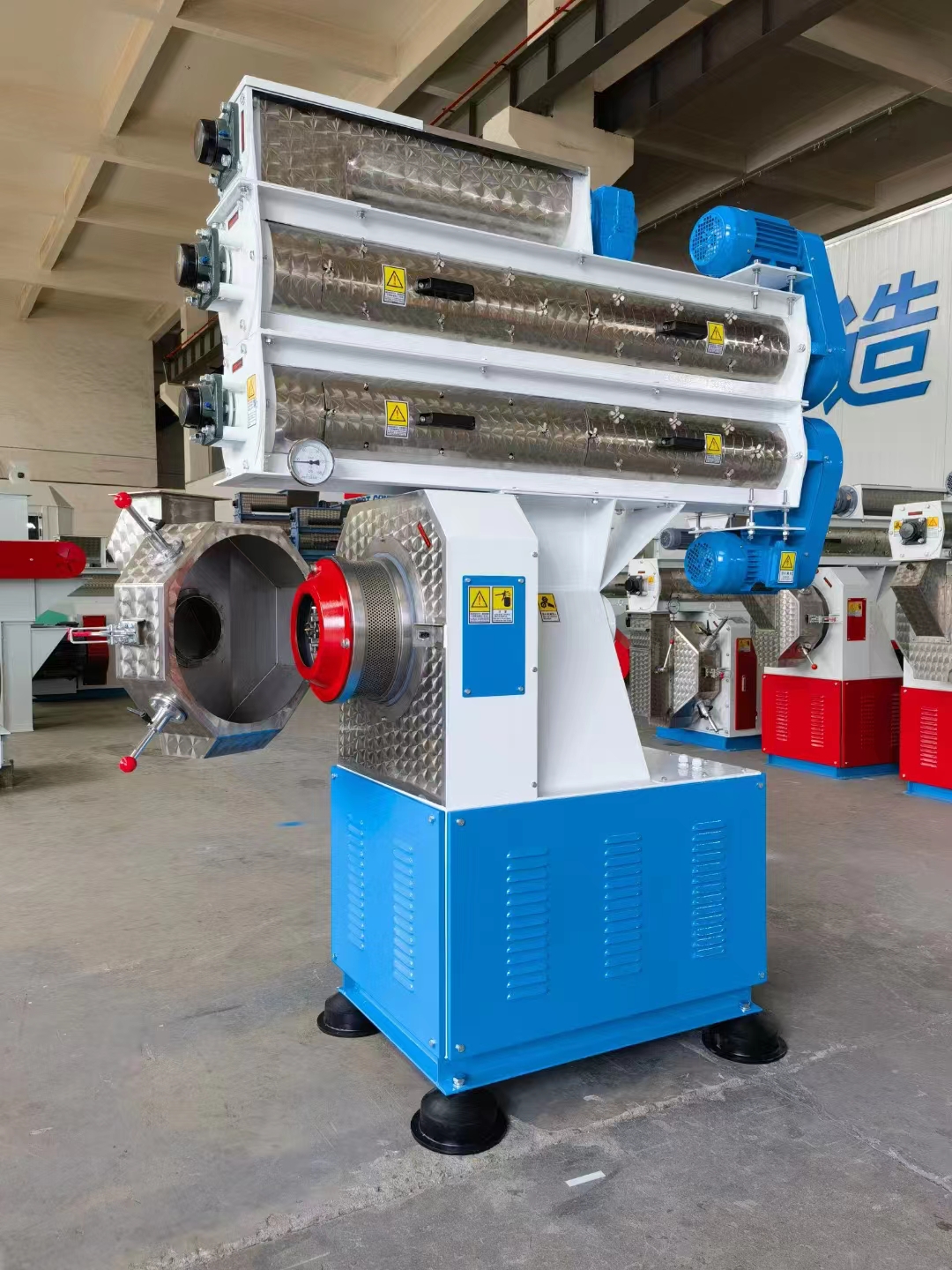
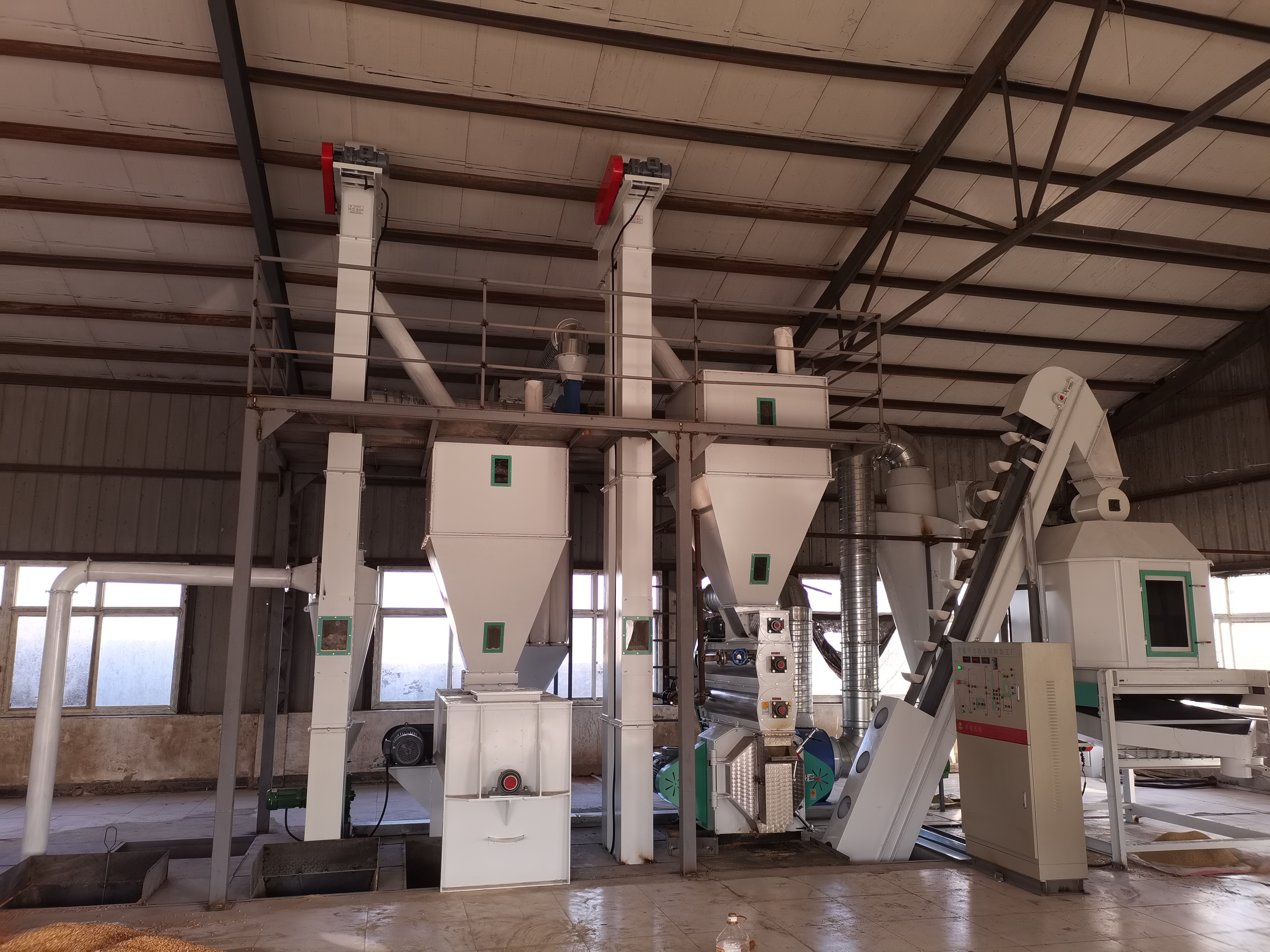
Jiangsu Huamu Machinery Co., Ltd. is located in Xibei Town, Wuxi City, with convenient transportation and favorable location conditions. The company specializes in manufacturing feed machinery, and its business includes feed production line design, installation, and commissioning. The company adheres to the philosophy of customer first and common development, providing the feed industry with products of stable quality and considerate services. In its common development strategy, the company cooperates with feed machinery enterprises, brings together professional talents, and carries out technical cooperation with several graduate schools and universities, forming product series such as ring die pellet mills, water-drop hammer mills, twin-shaft mixers, coolers, complete units for premix additives, complete units for livestock and poultry pellet feed, and complete units for aquatic feed. The company has an experienced design, production, and installation team and can design and manufacture 1–30 t/h projects for powder feed, premix, pellet feed, and special aquatic feed. With customer first and common development as its business principles, the company continues to provide complete equipment and engineering services to the feed industry; for 1–30 t/h projects, it can provide integrated design, manufacturing, installation, and commissioning for powder feed, premix, pellet feed, and special aquatic feed.
To learn more, please visitwww.huamufeedmachinery.com; Contact information is subject to the information published on the official website.
Jiangsu Huamu Machinery Co., Ltd. is located in Xibei Town, Wuxi City, enjoying convenient transportation and significant geographical advantages. The company specializes in the manufacturing of feed machinery and equipment, and can undertake the full-process business of scheme design, equipment ins...
No.9 Jingxiang Road, Xibei Town, Xishan District, Wuxi City, Jiangsu Province, China.
